


Thoracic Surgery In The Department of Cardiothoracic Surgery

Patient Care

lung tumorLung Cancer

We consider excellence in surgery for lung cancer to be at the core of the mission of the Thoracic Surgery service at Stanford. You will be treated at Stanford by thoracic surgeons who are super-specialized in the management of lung cancer and have trained to treat this disease at some of the top thoracic surgery units in the country. We work together with oncologists, radiation oncologists, pathologists, and radiologists at the Stanford Cancer Center to provide a comprehensive approach to therapy. Drs. Joseph Shrager, Richard Whyte, Robert Merritt, and Chuong Huang are surgical lung cancer specialists who are specially trained to perform all of the different types of lung cancer resections that might be required – with the lowest risk and greatest chance of cure. Several studies have now demonstrated that risks are lower and cure rates higher when lung cancer procedures are performed by surgeons, such as those at Stanford, who are specialized in these techniques. We count among our surgeons some of the most experienced lung cancer surgeons in the San Francisco Bay Area and the country. More »

Back to top »

normal stomachBenign Esophageal Disease

At Stanford, we provide a wide range of minimally invasive surgical treatments for gastroesophageal reflux disease (GERD), achalasia, paraesophageal hernia, and Barrett’s esophagus. Minimally invasive treatments are beneficial because, in some cases, they may eliminate the need for more complex surgeries, and in most cases, minimally invasive treatments reduce the patient's length of hospital stay and shorten recovery time. We have four general thoracic surgeons that are specially trained in these methods to treat non-malignant esophageal diseases. More »

Back to top »

mediastinumMediastinal Diseases and Masses / Thymoma

Stanford thoracic surgeons evaluate and treat a high volume and wide variety of mediastinal diseases.  Since many of these lesions are benign, minimally invasive approaches, which allow for less discomfort and faster recovery, can often be utilized.  As in all areas of thoracic surgery, Stanford thoracic surgeons have sub-specialty training in the surgical management of mediastinal tumors and diseases. They have far more experience with these relatively rare diseases than general surgeons and even cardiothoracic surgeons at surrounding community hospitals. For example, in the past year alone, Stanford thoracic surgeons have removed or biopsied 77 mediastinal masses – a very large volume of these cases for a single institution. More »

Back to top »

Sympathetic nerve chainsThoracoscopic Sympathectomy for Hyperhidrosis

Stanford surgeons have performed over seventy-five VATS sympathectomies in the past five years, representing a very extensive experience and demonstrating our significant commitment to the care of patients with hyperhidrosis. Drs. Joseph Shrager and Chuong Hoang have a particular interest in this condition. More »

Back to top »

Esophageal Cancer

Although the incidence of esophageal cancer is steadily rising, few surgeons get extensive experience with surgical diseases of the esophagus. The Division of Thoracic Surgery has extensive experience with the management of cancer of the esophagus, including resection of the esophagus with reconstruction and restoration of swallowing, as well as endoscopic management of esophageal obstruction (laser and stenting). A multidisciplinary approach to patients with esophageal cancer, either through direct referral or through the Comprehensive Thoracic Oncology Clinic, is utilized in selected patients where a combination of surgery, chemotherapy, and radiation therapy may be helpful.

Back to top »

Chest Wall

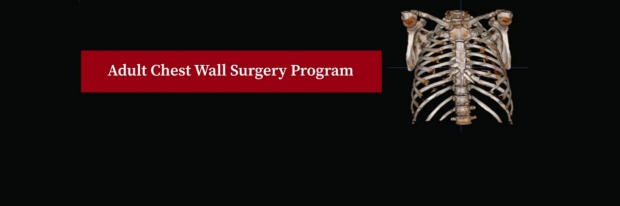
Chest wall tumors are uncommon and pose problems with both diagnosis and management. While the lesions are often apparent on physical examination or radiographic studies, a firm diagnosis may require an open, rather than needle, biopsy. Chest wall resection, with or without removal of adjacent lung tissue, can be treated without surgery. Chest wall reconstruction may require placement of prosthetic materials and rotation of muscle flaps to create cosmetically acceptable and functional results. Patients with chest wall tumors may benefit from evaluation in the Comprehensive Thoracic Oncology Clinic as multidisciplinary approaches involving surgery, chemotherapy, and radiation therapy may be necessary.

Back to top »

Diseases of the Airway

Diseases of the trachea and major airways are uncommon; however, the Division of Thoracic Surgery has been interested in such diseases for years. Procedures such as tracheal resection, rigid bronchoscopy, laser ablation of tracheal tumors, and tracheal stenting are offered.

Back to top »

Video-assisted Thoracic Surgery

Over the last 5-10 years, the field of minimally invasive surgery has expanded dramatically. Initially used primarily by gynecologists, minimally invasive techniques and equipment were adapted for general surgical (abdominal) procedures and subsequently for intrathoracic use of procedures such as pulmonary resection, pleural biopsy, removal of mediastinal tumors, and sympathectomy (for reflex sympathetic dystrophy and hyperhydrosis.)

Back to top »
The Division of Thoracic Surgery in the Department of Cardiothoracic Surgery at the Stanford School of Medicine is located in the San Francisco Bay Area in northern California. For more information about our services, please contact Donna Minagawa at (650) 721-2086 or Angela Lee, RN, MS, at (650) 721-5402.

Stanford Medicine Resources:

Footer Links: